

Key Takeaways
- Assisted living supports older adults who need help with daily tasks without requiring a highly clinical setting.
- Personal care, medication management, meals, and other services can be tailored to each resident’s needs.
- Housekeeping, maintenance, and meal services reduce physically demanding everyday responsibilities.
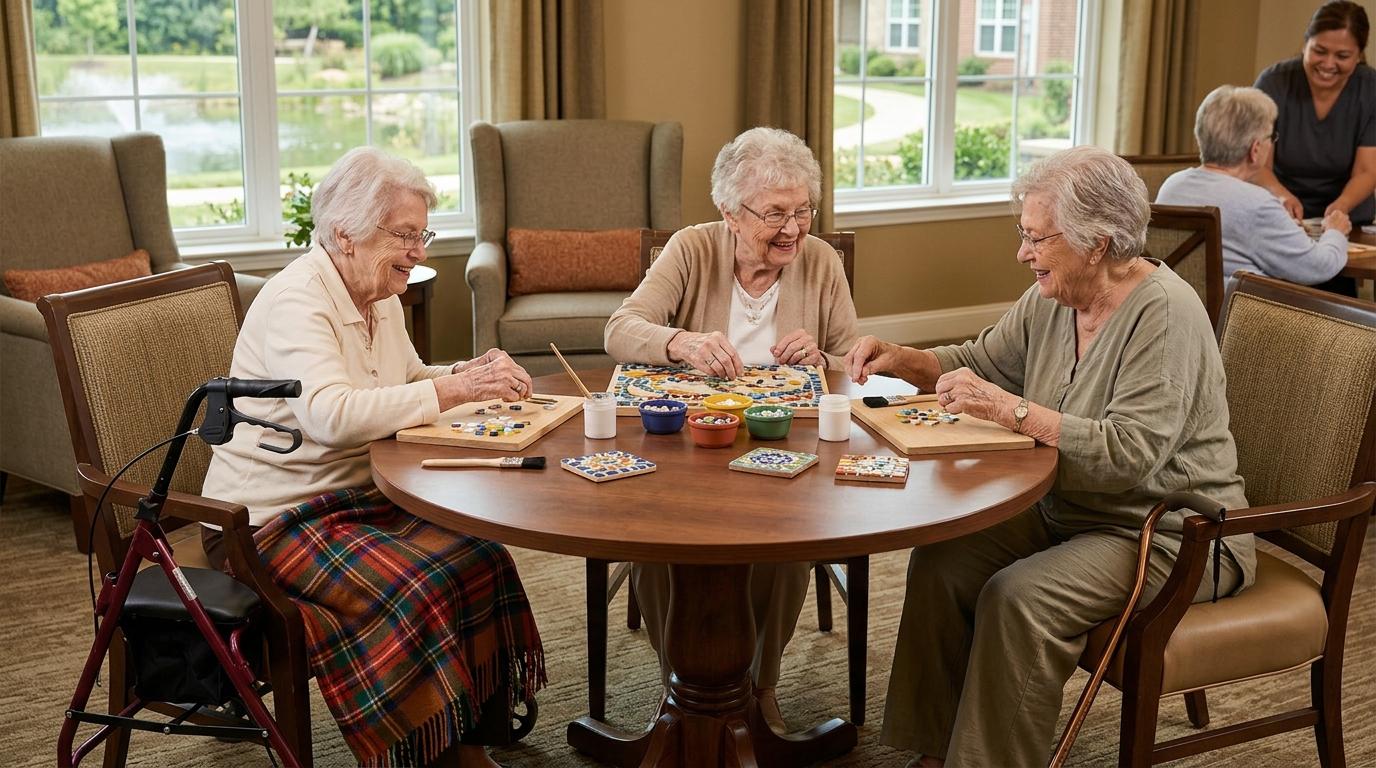
- On-site activities, shared spaces, and events make social opportunities easier to access for residents with limited mobility.
- Mobility assistance and accessible community spaces make it easier to reach meals, activities, and common areas.
What Assisted Living Offers Seniors with Limited Mobility
Changes in mobility can affect much more than walking from one room to another. Dressing, preparing meals, keeping up with household tasks, leaving home, and participating in favorite activities can all become more difficult. For families, these changes often raise a practical question: how much support does an older adult need to continue living comfortably and staying involved in daily life?
Assisted living for seniors with limited mobility provides support with everyday routines in a setting designed around the needs of older adults. Residents can receive assistance where they need it while continuing to make choices, follow familiar routines, and do what they can independently.
What Is Assisted Living?
Assisted living is a residential option for older adults who benefit from support with certain parts of daily life but don’t require a highly clinical setting. Residents have their own routines and preferences while receiving assistance based on their needs. That support can cover areas such as personal care, medication management, meals, and other everyday tasks.
In assisted living, someone might need support getting dressed in the morning, reaching the dining room, or completing another daily task. The team’s goal isn’t to take over. It’s to provide the appropriate level of assistance while respecting what each resident wants and is able to do independently.
The Benefits of Life in Assisted Living
Limited mobility can turn ordinary responsibilities into a lot of work. Assisted living brings support, services, activities, and other parts of daily life into one community, so residents have fewer logistical hurdles to manage throughout the day.
Less Strain From Everyday Responsibilities
Housekeeping, home maintenance, and preparing every meal require time and physical effort. In assisted living, residents don’t have to build their days around keeping up with those responsibilities, because the community takes care of it all. They can put that energy toward the routines, activities, and people that are more important to them.
More Ways to Stay Social
Getting together with other people becomes harder when every outing requires transportation, extra planning, or an accessible destination. Assisted living puts neighbors, shared spaces, meals, events, and activities much closer to home.
More Time Together With Family
Family visits shouldn’t always turn into a list of household jobs that need to get done. With everyday responsibilities handled within the community, there’s more room for conversation, a meal together, or simply an afternoon spent catching up. Peregrine also welcomes family members to share meals with residents at no additional charge, giving families another easy way to spend time together.

How Assisted Living Supports Seniors With Limited Mobility
Two residents with limited mobility won’t necessarily need the same kind of assistance. One person may handle most of the day independently but need support with a few physical tasks, while another may rely on the team more regularly. Personalized care keeps that support tied to the resident rather than a standard routine.
Assistance With Daily Routines
Tasks such as dressing and other activities of daily living can become frustrating or tiring as mobility changes. Team members can step in with the assistance a resident needs instead of expecting them to struggle through the task alone.
Support Getting Around the Community
A long walk to lunch or an activity can be a real obstacle for someone whose mobility has declined. Assistance with getting around the community keeps everyday destinations within reach and makes it easier for residents to remain part of community life.
Accessible Spaces for Daily Life
The layout of a community matters. Accessible hallways, common areas, living spaces, and outdoor areas reduce some of the barriers residents with limited mobility may encounter at home or while going out.
Tips for Picking the Right Assisted Living Community
A tour can tell a family a lot, but it helps to look beyond décor and first impressions. If limited mobility is part of the decision, consider how the older adult would actually move through the community and what their typical day would require.
It helps to:
- Walk the routes between apartments, dining areas, activity spaces, and other places the resident would use regularly.
- Assess the community’s safety features to determine the support they provide.
- Look for physical barriers that could make everyday movement unnecessarily difficult.
- Ask how the community determines the amount of assistance each resident needs.
- Find out how care plans change if a resident’s mobility or daily support needs change.
- Ask which activities and events are accessible to residents with different mobility levels.
- Discuss how the team communicates with families about changes in a resident’s needs.
- Consider whether residents are encouraged to remain involved in tasks and decisions they can still manage independently.
The right fit should work in practice, not just look appealing during a visit. Asking specific questions about mobility, routines, and accessibility gives families a clearer picture of what everyday life would actually look like for their loved one.
Taking the Next Step Toward Assisted Living
Limited mobility can change how an older adult gets through the day, but it doesn’t change who they are or what matters to them. Good assisted living support leaves room for personal routines, interests, relationships, and choices while providing assistance with the tasks that have become difficult. That balance gives residents the support they need without making their limitations the center of daily life.
At Peregrine Senior Living at Crossgate, our person-centered approach reflects the Peregrine Way and the needs of each resident. A visit gives families the chance to see our community, ask detailed questions, and talk with our team about the support their loved one needs now and how those needs could change over time. Schedule a tour of our community today to learn more about assisted living for your loved one.









No more posts